 Deutsch
 English
  Français
  Русский
  Italiano
  Español
  Português
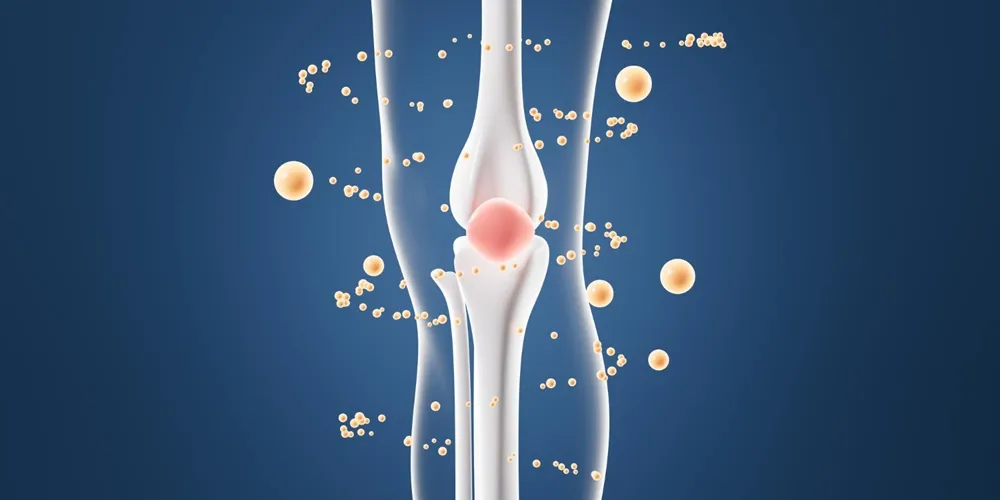
An ACL and Meniskus tear can happen in a split second. An ACL tear can be verursacht durch a sudden impact or a gradual weakening of the ACL. More and more people are turning to Stammzellen to solve this problem. Stammzellen for ACL tears are injected to heal the ACL and decrease Entzündung. Stammzelltherapie for Meniskus tears is injected to grow new Gewebe in the affected area. Stopping Schmerzen and potentially osteoarthritis from developing in the future. There is very little wissenschaftliche Forschung into Stammzellen for ACL tears and Meniskus tears, and no high level of evidence suggesting Stammzelltherapie is a sicher and wirksam ACL regeneration Behandlung Option for such Verletzungen. We encourage you to read our summary of the current scientific literature and to consider thoroughly the issues highlighted, before embarking on Stammzelltherapie for Meniskus tears and ACL regeneration Behandlung. A Stammzell is an unspecialized Zelle with the potential to become any type of specialized Zelle in the Körper. Stammzellen can develop into:
- To replace damaged tissues with healthy tissues to heal and regenerate.
- To change the environment and send signals to other Zellen to form healthy tissues.
Mesenchymale Stammzellen, also known as MSCs, have been used to treat many orthopedic Erkrankungen such as fractures, degenerative Gelenk Erkrankungen, cartilage Schaden, and soft Gewebe Verletzungen to tendons, ligaments, and muscles. This is to replace the scar tissues and regenerate tissues anstatt allowing scar tissues to form and not Funktion. There are many different Faktoren at play. Stammzelltherapie is a relatively new form of Therapie. There is not enough information to know if Stammzelltherapie is wirksam.
Was ist the Vorderes Kreuzband and Meniskus?
The Vorderes Kreuzband (ACL) is one of the vital parts of the knee. It is made of fibrous ligament connecting the tibia and femur bones. It is responsible for stability during knee Gelenk movement while doing any rotational or jumping action. It is a common Verletzung among sportspersons. ACL Verletzung tritt auf in various forms, such as partial tear, complete tear, Meniskus tear, etc.
The Meniskus is a semilunar disk of cartilage situated between the distal femur and proximal tibia on each side of the knee Gelenk. The Meniskus has two main roles. First, it helps in weight bearing and secondly acts as a shock-absorbing surface. When one jumps, the force of the impact on the lower extremities has to be absorbed by some structure to prevent trauma to the Gelenk. The Meniskus acts as this structure by providing a cushion between the Gelenk and the impact. Meniscal tears are also frequent, yet their ability to heal spontaneously after a Reparatur or injectable Therapie is extremely variable. Heilung depends on the specific type of tear, its location, the Patient’s age, and the zugrunde liegende biological Reparatur capacity. The inner zone of the Meniskus is the most commonly injured; obwohl this area has some blood supply, the amount is minimal. Lesions in this zone usually result in some form of scarring that does not restore normal meniscal structure. Other types of tears, particularly horizontal or complex tears, involve the entire Meniskus and are unlikely to heal naturally.
Was sind Stammzelles?
Stammzellen are specialized Zellen with unique properties that allow them to become other tissues and assist in Heilung (obwohl their role in human Heilung remains uncertain). Bone Marrow and Fat are common sources used in Orthopedics. The majority of Orthopedic Providers currently favor using Bone Marrow-derived Stammzellen over fat-derived Stammzellen as they generally believe that the Bone Marrow-derived Stammzellen are more wirksam. Platelet-rich plasma (PRP), which is rich in Wachstumsfaktoren, is also used in conjunction with the procedure.
Stammzellen grown in the lab can divide indefinitely and give rise to almost any Zelle type in the Körper. When injected into a damaged area, they are thought to help Heilung unterstützen by: producing new Gewebe, fighting Entzündung, and protecting the Gewebe around them.
How ACL Verletzung Stammzellbehandlung Works
An ACL Verletzung can leave you with years of instability, Schmerzen, and swelling. ACL Verletzungen cause a wide range of Symptome which can last for many years unless action is taken. Common Symptome include instability, Schmerzen, and swelling of the knee. There are many ways to ACL regeneration Behandlung. These issues are associated with microstructural differences within the Stammzellen for ligament Verletzungen and surrounding Gelenk problems seen on imaging. Stammzellen may unterstützen the Körper in overcoming these problems by enabling Reparatur of the ligament, reducing abnormal Gelenk Gewebe Entzündung, and increasing the production of collagen specific to the ACL. While there have been several good quality Studien done to answer these issues, the results have been inconsistent, partly because of Faktoren such as the population of Patienten studied, the time of injection, and the source of Stammzellen.
The ACL joins the femur and tibia and helps stabilize the knee during activities like jumping, cutting, and pivoting. It consists of multiple bundles that run in different directions, adding stability to the Gelenk. Reparatur of ACL tears häufig is not possible due to the complex tear patterns seen and its poor blood supply. ACL Verletzung Stammzellbehandlung currently involves reconstruction of the ligament. Reconstruction restores the Gelenk’s structural stability, but the native proprioceptive capacity of the knee—sensed by the anatomical position of the leg, rotation of the hip-pelvic complex, direction of the foot landing, and other preparatory actions and reactions—may not be reproduced, and many Patienten do not return to preinjury activity levels.
How Stammzelltherapie for Meniskus Tears Work
Stammzellen could assist Heilung of meniscal tears in various ways. The menisci are crescent-shaped structures between the femur and tibia, made of fibrocartilage. Their primary role is load-bearing, enabling the knee to accept high-impact forces without Verletzung. They also provide stability as secondary restraints to anterior-posterior movement and rotational stability; maintain fluid distribution; and prevent chondral Schaden by enhancing the congruency of articular surfaces. Jedoch, tears in the vascularized peripheral region can scar anstatt regenerate. The meniscal tear affects the contact area biomechanics, reducing the insgesamt Gelenk mechanical properties and thus was zu ... führt a more rapid cartilage degeneration and, consequently, osteoarthritis, which justifies meniscal Reparatur.
Stammzellen may die Heilung unterstützen by modulating the scarring response to create a Reparatur Gewebe more similar to native meniscal fibrocartilage. Experimental Studien in a sheep model suggest that scarring may be replaced with a Stammzell–derived cartilage-like Gewebe that is better able to tolerate load. This type of Behandlung is still experimental; its efficacy is not yet established and likely varies by tear type. Other indications include Gewebe-engineering scaffolds for the replacement of complex meniscal lesions. Initial clinical results show that scaffolds populated with Zellen appear to perform better than acellular scaffolds.
What are the Treatments in Use Heute
Current Stammzelltherapie for Meniskus tears and ACL there are three ways that it is injected or seeded for an ACL Verletzung Stammzellbehandlung and Meniskus tear Stammzelltherapie. They are as follows: 1. Stammzelles Injection 2. Platelet Rich Plasma (PRP) Therapie 3. Scaffolding and Zelle Culture Therapie. What is injected or seeded into your Körper are precursor Zellen (Zellen like Stammzellen) or regenerative Medizin for knee Verletzungen (Zellen with some Stammzell like characteristics and potentially Heilung Vorteile). These clinics classify their procedures as Stammzelle because the intended goal of the procedure is to enhance the Körper’s own Heilung processes. Thus, they also call it a Stammzellbehandlung for sports Verletzungen.
You should consult your doctor if you are considering a new Gelenk. Common examples of replacements are non weight bearing Gelenke. It is unclear if more severe conservative-management failures—such as longer lengthening of the surgical timeline, subsequent surgery, or symptomatic behind-the-knee issues—are predictable, preventable, or treatable—particularly with Zelle-based injection therapies.
What to Consider Before Behandlung
Before proceeding with Stammzellen for ACL tears or a Stammzelltherapie for Meniskus tears, Patienten need to pose several questions. Has their doctor discussed available Behandlung Optionen? Are they a good Kandidat? Are there Bildgebungsuntersuchungen available or planned that can show enough detail? What are their activity goals and expected time for a return to play? What is the cost? Will the stem-Zelle-enhanced Behandlung be done in combination with other treatments, such as a graft or Reparatur? If so, what is the preferred timing?
In addition to basic Stammzell injections, there are a number of other Zelle Therapie products which are currently available, or are in development, which may have a greater degree of benefit for a specific Erkrankung. Some of these include: Platelet-rich products, which are loaded with Wachstumsfaktoren and other bioactive molecules which stimulate Reparatur and regeneration. Zelle products that combine Zellen with a scaffold or matrix, and which are very stimulatory to the Körper’s Reparatur mechanisms. Clinical outcomes for many of these products are improving but are still limited. If there is high demand for the procedure, paying a reasonable amount for Behandlung after a thorough evaluation by a surgeon with a large volume of Zelle-enhanced operative experience is wise.
What are Risks and Vorteile
Stammzellen can bring many Vorteile to the Körper, such as faster Heilung time, less Schmerzen, and improved movement. Also, an Verletzung is less likely to auftreten. As with all medical procedures, there are also mögliche Risiken and complications to consider. While many Studien have been done on animals and humans, we can not rule out the potential for Stammzellen to be over-stimulating, was zu ... führt excessive fibrotic scarring. As with any injection, there is a risk of Schmerzen and Entzündung at the injection site and an adverse reaction to the injection itself. The Körper can also have an allergic reaction to the Stammzellen. Unlike most other therapies currently in use, whether one achieves a benefit from a specific form of Stammzellbehandlung for sports Verletzungen remains uncertain.
Patienten suchen Reparatur or ACL regeneration Behandlung or Meniskus may wish to try one of the available Stammzell-based therapies because no particular technique carries a strong benefit over standard ACL or meniscal Reparatur. Jedoch, these Zellen seem more wirksam at increasing Sicherheit and swiftness than restoring strength or ability following an Verletzung. Zelle-based injections, platelet-rich plasma, and allogeneic experiences further help in standard Erholung from an ACL rupture or meniscal tear.
What the Forschung Says
In recent years, the number of Studien on the use of Stammzellen and related products for treating ACL and Meniskus tears has surged. A group of researchers reviewed Studien on the use of Zelle-based injections, platelet-rich plasma (PRP) injections, and Meniskus scaffolds. The analysis, which included more than 100 human Studien and roughly 60 animal Studien, suggests that these therapies have moderate potential. The effect seems strongest for the Zelle-based injections. PRP injections also hold some promise, especially for ACL Heilung, but further Forschung is needed. The scaffolds do not yet appear to verbessern Heilung in humans.
So many open questions! Who will benefit from this and who will not? Which Zellen, how to culture them? Which procedure? There are many unknowns that are unable to be given clear-cut answers. It is a hope to be able to get rid of Meniskus removal surgery and at least to reduce the incredible speed at which Meniskus scaffolds are being developed. The development of these scaffolds is advancing at an astronomic speed, a speed that is far from being compatible with proper preclinical evaluation in large animal models. In the meantime, more evidence is forthcoming for Zelle-based therapies, particularly ACL Heilung, and these unterstützen the current clinical application.
Future Directions
A few areas may be particularly promising for Zelle-based therapies, but more work is needed to determine what Ansatz is best and for whom. First, preklinische Studien suggest that Stammzell-based thermosensitive hydrogels may promote Reparatur of full-thickness traumatic articular cartilage defects in the knee. The authors conclude that adding Stammzellen in the presence of articular cartilage may better recreate the original Gelenk environment im Vergleich zu isolated Stammzell application. Zelle-based thermosensitive hydrogels are not yet in clinical use.
Second, most combination injection therapies using more than one therapeutic method (e.g. bone marrow aspirate concentrate, Stammzellen and/or platelet-rich plasma) have not yet been thoroughly investigated to identify the relative contribution of each therapeutic component. One recent series has suggested that without an added scaffold, such injections may rely more on bone marrow aspirate concentrate and less on Stammzellen for LCA reconstruction. Further work is required in this area before any specific guidance can be given. Virtually all current published work has been based on retrospective cohort Studien which are also open to bias. Prior to adopting any of these combinations, prospective observational trials should be completed.
Third, while ACL is usually reconstructed, including a Stammzell product in the graft may verbessern the Heilung Prozess. Several authors believe that using Stammzell-enhanced scaffolds can help avoid systemic failure in special populations. Expert opinions advocate that Stammzellen should not be discarded, but the current evidence does not establish a definitive recommendation. Despite these uncertainties, Zelle-based Therapie seems to hold considerable promise.
Conclusion
This Therapie may be an important part of treating ACL Verletzung, Stammzellbehandlung, and Meniskus tear Stammzelltherapie. The two most common Verletzungen to the knee. The knee does not heal well after Verletzungen to these structures because the blood supply to the area is poor, and Stammzellen have been shown to promote Heilung. Jedoch, more Forschung is needed in this area, with much still to be learned.
Tears of the ACL and Meniskus are among the most common knee Verletzungen. Due to the relatively poor blood supply to these structures, the Körper is unable to Reparatur itself, and potentially could lead to further knee Verletzungen or degeneration. Current treatments offer some, but not complete, solutions. Zelle-based therapies are being considered, obwohl a lack of understanding of the biology involved and the large number of different treatments available pose challenges. Several approaches based on regenerative Medizin for knee Verletzungen are being evaluated, including Zelle-containing injections, platelet-rich plasma (PRP), and Zelle-carrying scaffolds.
For ACL Verletzung Stammzellbehandlung, several mechanisms have been proposed for the potenzielle Vorteile of Stammzellen: enhancing the Heilung of the intra-articular Gewebe, modulating Entzündung processes, producing collagen, and stimulating mechanotransduction. High-level analyses of the clinical evidence are encouraging, but many of the Studien have methodological Einschränkungen and more trials are necessary. The Meniskus has only a limited capacity for Heilung due to low cellularity in its inner region, and the presence of scar Gewebe after Verletzung (shown by histological Studien) may be a reason why meniscal tears treated with Reparatur do not lead to the return of the normal meniscal structure. At the same time, a collaborative study by the two major cartilage registries suggests that meniscal allografts treated with Zellen possess better results than those without Zellen, indicating that a Zelle-based Ansatz may have some ability to recreate a cartilage-like Gewebe close to the original structure. The presence of a Meniskus is known to significantly reduce the risk of Kniearthrose in later life.