 English
 Français
 Deutsch
 Русский
 Italiano
 Español
 Português

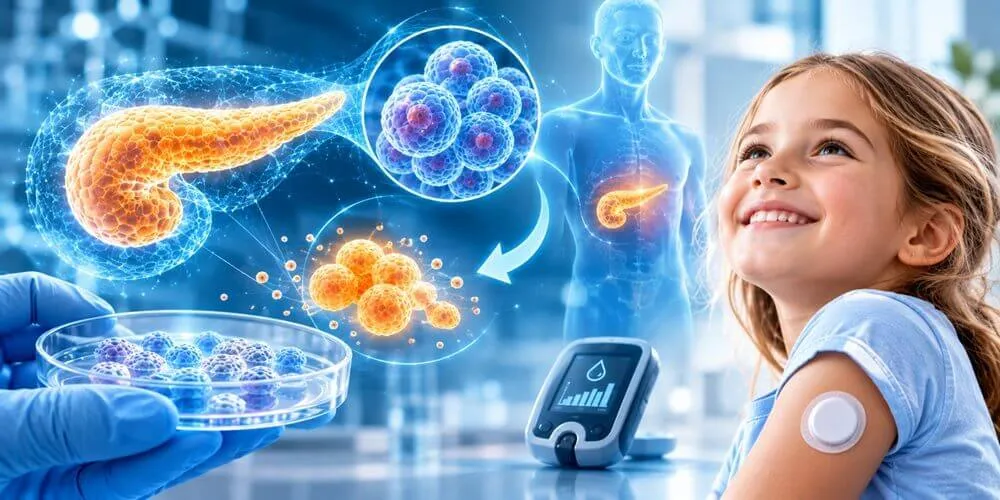
What is the current state of stem cell therapy for Type 1 diabetes 2027? Recent advances have brought Type 1 diabetes cell therapy research closer to clinical reality. Achieving a functional beta cell mass after transplantation has remained elusive, but several key steps are now on the horizon: acquisition of stem cell-derived beta cells that have potential for therapeutic application, introduction of immunomodulation or encapsulation strategies to prevent immediate graft rejection, and proof that these strategies can be safe and effective in first-in-human trials with stem cell-derived beta cells.
Compared with alternatives, stem cell-derived beta cell therapy may offer greater durability and restoration of endogenous hormone regulation but at higher risk for median graft function, more severe post-transplant adverse events, and long-term immunosuppression without a bridging strategy. The inevitable remaining questions about if and when such routinization will emerge depend on endpoints and trial design. Several trials of this sort are ongoing or have recently completed, with phase II or even phase III results expected soon. Stem Cell Therapy for Type 1 Diabetes 2027 will look five years forward to events just now being gauged for their implications: What now seems possible?
What are the main goals of regenerative medicine for diabetes in 2027?
In 2027, clinical-grade stem cell-derived beta cell replacement therapy aims at restoring glycemic control among patients with Type 1 diabetes cell therapy research under conditions of minimal immunosuppression and its long-term complications. It does not necessarily mean that the disease shall be cured; rather, substantially reducing patient suffering by improving glycemic control, decreasing insulin demands, and lowering risks for severe hypoglycemic events would represent a major therapeutic breakthrough supporting applications to wider ranges of diseases with similar products derived from stem cells.
Clinical trials with stem cell-derived beta cells are ongoing and have been designed to address both immunogenicity and tumorigenic potential. Additional immunomodulatory or encapsulation strategies can be included; these will allow the investigation of disease-modifying effects through active or passive modulation of the immune response. The long-term safety monitoring of pediatric patients in diabetes clinical trials worldwide includes risk assessments related to infection, tumorigenicity, and the occurrence of off-target effects. Not all clinical research is needed for these technologies to enter routine practice; however, adequate validation is important for a responsible therapeutic step forward. A possible timeline toward 2027 would include regulatory approval of an investigational new drug application with a clinical-stage partner using a reproducible cell development process, scalable production and quality control strategy availability, plus initial results from a stem cell-derived beta cell replacement therapy trial in patients who previously had insulin-producing beta cell mass.
What is the landscape today of Type 1 diabetes stem cell treatment therapy research?
Clinical trials that are underway deploy immunomodulation and encapsulation to avert immune attacks and mitigate graft rejection so as to boost treatment safety and efficacy. Tumorigenicity, ectopic differentiation, and infection remain latent dangers for all stem cell-derived therapies, necessitating careful monitoring. Milestones for 2027 center on trial progression through Phase 2 and 3, seamless scaling from early exploration into commercial readiness, and patient access.
2027 may see the first time ongoing clinical trials establish an effective future of diabetes treatment 2027 for Type 1 diabetes by the α−+/− cell reprogramming route or β cell replacement therapy. The first patients receiving stem cell-derived β cells will be a landmark in regenerative medicine, with Type 1 diabetes stem cell treatment as the first disease to benefit from it.
However, these clinical trials shape very much this field: they define major barriers shaped by that transplantation aspect-a possible immunosuppression or immune escape demand how to protect graft against patient’s own immune system and opportunistic infection-and ensure close monitoring for inevitable side effects of therapy such as transformation of graft into some form of cancer (tumorigenicity) risk differentiation into unwanted cell types (ectopic differentiation) plus risk generating cells with viral infections being transferred. While stem cells confer potentiality generating large numbers of β cells, these trials critically evaluate whether really enough cells can be produced cost-effectively enough quality to treat a sizable number of patients.
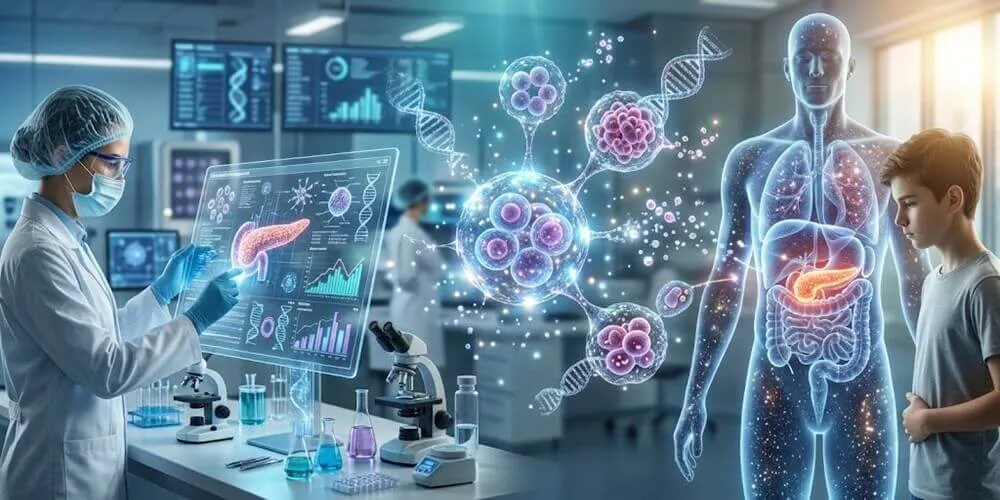
Type 1 diabetes stem cell treatment would likely be useful in those individuals who have some preserved insulin secretion that is not physiologically normal. The patients with better glycemic control in such a scenario compared to very low-functioning pancreatic reserve might expect the avoidance of hypoglycemic episodes and lower risks of chronic diabetes-related complications. The syndrome of hypoglycemia unawareness is usually linked to longer or more difficult-to-manage disease and may therefore not be completely reversible by any type of therapy. At least partially preventable severe hyperglycemia, along with a reduction in the number of hypoglycemic events, seems realistic as a goal by 2027 for improved quality of life for patients; these findings clearly indicate that this is an important ultimate goal of regenerative medicine for diabetes.
Patients under treatment with a transplant of beta cells derived from stem cells should have their blood glucose regularly monitored through the measurement of glycosylated hemoglobin, ideally three to four times per year at follow-up visits after surgery to assess newly implanted beta cells and general health. These patients will still need to pay attention to diet and lifestyle, although the future of diabetes treatment 2027 may permit more normal life, provided there is appropriate monitoring and precautions as in a healthy person. Availability will depend on cost, reimbursement conditions, and full local functional or logistic support (infrastructure/healthcare services/expertise).
These cells might eventually become part of routine care given to Type 1 diabetic patients in the future. The intention would be to keep intact that ability which permits secretion of sufficient amounts of insulin so as not only to prevent ketoacidosis but also to ameliorate those symptoms most directly related to excursions in glycemia, particularly those worsening quality-of-life issues.
The Future of Stem Cell-Derived Beta Cells in Type 1 Diabetes Treatment
An editorial published in Cell Stem Cell in March 2023 stated that the development of cell therapies for T1D was entering a new phase. This statement meant that some groundwork was being laid toward commercializing what could be considered the first therapy ever for this disease: stable, highly purified, functional, and immuno-protected stem-cell-derived beta cells for T1D. Progress was expected in four years, but much work remained to be done. Expectations about future states of regenerative T1D therapies were shared along with translational requirements by 2027.
The objective for stem cell-derived beta cells in all individuals with T1D is to achieve durable glycemic control while simultaneously minimizing the risk of severe hypoglycemia. It should be emphasized that end-stage insulin deficiency has not yet been realized with current therapies, particularly when considering the diverse patient requirements from pricking, achieving tight euglycemia, or merely avoiding the burden of 8-10 daily pricks. Addressing secondary complications through long-term delivery of adequate glycemia without significant hypoglycemia is increasingly becoming a primary goal. Challenges in therapy for T1D stem cell-cure extend beyond just limited donor tissue availability; one must also consider an immune response to these surrogate beta cells.