 English
 Français
 Deutsch
 Русский
 Italiano
 Español
 Português

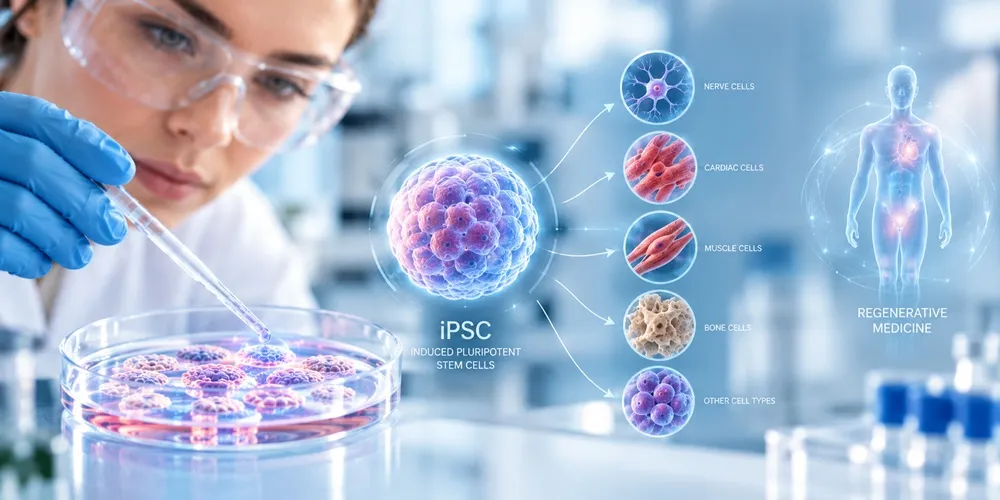
How can induced pluripotent stem cells be defined in the simplest terms? Induced pluripotent stem cells are adult cells that have been genetically reprogrammed to an embryonic stem cell-like state for use in regenerative medicine. A skin or blood cell is treated to express certain genes that convert it to a pluripotent stem cell capable of differentiating into any tissue type. This process enables researchers to generate pluripotent stem cells for basic research, drug discovery, and applications in regenerative medicine. More specifically, in iPSCs in regenerative medicine, the reprogrammed cells will be used to repair or replace damaged tissues in patients suffering from eye, heart, and nerve injuries. Procedures involving engineered tissue grafts, organoid structures, disease-specific cell models, as well as testing drug efficacy will also be helpful.
What are the current uses of iPSCs in regenerative medicine?
Induced pluripotent stem cells hold ESC-like characteristics and provide an autologous source of pluripotent cells for application in regenerative medicine; thus, they are widely used for human disease modeling, drug discovery, drug screening, and preclinical toxicity testing. They also assist in creating patient-specific stem cells tissues meant for transplantation and therapy. Recent clinical reports, along with clinical-grade cellular products from iPSC sources, represent preliminary steps toward integration into patient therapies. One of the most rapidly advancing fields—iPSC therapy—has come about because there is an urgent need to create transplantable organs that will help with the increasing shortage of life-saving organs in critical conditions. Clinical reports recently published and clinical-grade cellular products derived from iPSC sources represent initial steps toward integration into patient therapies. Although their potential ability to specifically differentiate into any somatic cell type, plus their capacity to be established as patient-specific stem cell lines, has attracted global attention, fundamental issues such as tumorigenicity and epigenetic changes during long-term culture propagation still persist . With respect toward regenerative medicine with iPSCs as well as developmental biology, iPSCs’ capability for differentiating into three germ layers makes possible the production of three-dimensional organ-like structures, organoids, and organogenesis in vitro.
What are the procedures involved in research on iPSC therapy?
Research on iPSC therapy proceeds through nine major procedural steps: acquisition of starting cell material, reprogramming of starting cells into induced pluripotent stem cells, directed differentiation of iPSCs towards the functional cell type, characterization for safe and efficient differentiation of iPSCs towards the desired cell type, functional testing for differentiated cells, contamination testing, and preclinical studies prior to clinical trials aimed at providing therapeutic cell material for transplantation or any other application.
In step one, patient-specific stem cells are generated for a particular individual in need of the therapy. A sample of skin or blood cells is taken from the patient. These somatic cells are reprogrammed into induced pluripotent stem cells by ethical reviewed and regulatory-approved methods. Patient consent is guided by ethical frameworks for protection, and teratoma formation tests in iPSCs are screened for safety in standard tests. After the safety confirmation of patient-specific iPSCs, these pluripotent stem cells will be used to generate functional cells that are required by the patient.
The next step is to prepare differentiated cells according to their intended use: therapeutic transplantation or testing as part of disease modeling and drug screening. The iPSCs will undergo directed differentiation towards the desired functional cell type; differentiated cells will then be tested to confirm their ability to perform desired functions, with possible transplantation to assess their integration capacity into surrounding tissue. Quality control checks ensure complete removal of differentiation signals and absence of contamination by undifferentiated pluripotent cells.
How can patient-specific pluripotent stem cells be used for regeneration?
Patient-specific stem cells enable regenerative technologies in two main ways: through enabling patient-specific cellular therapy and creating immunologically compatible cells with very low chances of rejection; both these uses require that the needed cells be derived from recipients themselves instead of using donor-derived tissues, which would elicit an immune response against foreign bodies.
Patient-derived cellular therapy begins with somatic cell samples from the intended therapy recipient, which can be reprogrammed back to pluripotency; subsequent differentiation produces specialized cell types required for the particular treatment modality.
An early example is the successful transplantation of retina pigment epithelium (RPE) cells derived from a patient’s own induced pluripotent stem cells back into her eye to rescue degeneration—regenerative medicine with iPSCs technology treats such a condition. Induced pluripotent stem cells created from patients with diseases characterized by dysfunction of specific cell types—such as cardiac myocytes, neurons, and other tissue types—enable further study toward developing restorative and reparative surgical interventions.
What challenges do iPSCs in regenerative medicine face?
Some promising advances notwithstanding, a number of issues must be addressed before iPSC-based stem cell therapy can safely enter routine clinical use. The safety of the introduced cells remains a primary concern due chiefly to the possibility of tumor formation and the difficulty in assuring fully reprogrammed, unstressed cells. Genetic and epigenetic variability among different iPSC lines must also be factored into experimentation and therapeutic approaches, as well as developing a system for large-scale manufacture and distribution of quality-controlled stem cells at an acceptable cost for medical use.
Finally, patients receiving interventions with stem cells should ideally have long-term follow-up so that any new safety problems can be picked up as quickly as possible and also to ensure proper monitoring of possible issues.
Most studies have thus far concentrated on preventing tumor formation and ensuring that the iPSCs truly represent a desired genetic background. Since tumors seem to arise from either undifferentiated or partially differentiated cells, it should be possible to develop protocols for differentiating iPSCs into target tissues before they are injected in order to reduce cancer risk.
In addition, genetically labeling vectors or identifying gene-expression signatures associated with early and late stages of iPSC differentiation and maturation will ensure that inoculated iPSCs are following the correct developmental program as well as not being retained in a pathological immature state within the transplant.
How do studies using iPSC disease modeling direct management?
The iPSC from the patient is an unparalleled model system for the study of diseases affecting the eye, nervous system, heart, and skeletal muscle since it carries the relevant genes from that particular patient. For rare Mendelian diseases, it is possible to create iPSCs from one or very few patients plus make disease models that characterize pertinent molecular pathways, plus induced cellular testing strategies. For more common conditions such as dry age-related macular degeneration (AMD), because of much higher prevalence, hundreds of iPSC lines have been made, enabling the formation of “consortiums” meant to define the cellular basis for this condition. Sooner or later down this road may come the time when all those afflicted with such diseases will be able to benefit from all the combined efforts by the iPSC therapy research community.
The work done so far speaks to the great potential of patient-specific iPSC disease modeling in determining therapeutic decisions and in monitoring responses to treatment. An advance of such nature was reported in a recent paper where iPSC lines were derived from four patients with dystrophic epidermolysis bullosa (DEB). DEB is a blistering disease of the skin due to mutations within the type VII collagen gene.
After topical treatment with a CRISPR-Cas9-based single-stranded oligonucleotide donor-mediated gene repair approach, modeling allowed evaluation of individual nonamplified skin fibroblast clones that supported optimal donor construct editing efficiency. Biopsies from this selected clone were tested for skin grafting and repair in a preclinical model of DEB. The above results thus give compelling support for the ability of patient-specific iPSC disease modeling to direct clinical care.
How do researchers study regeneration in iPSC-derived tissues?
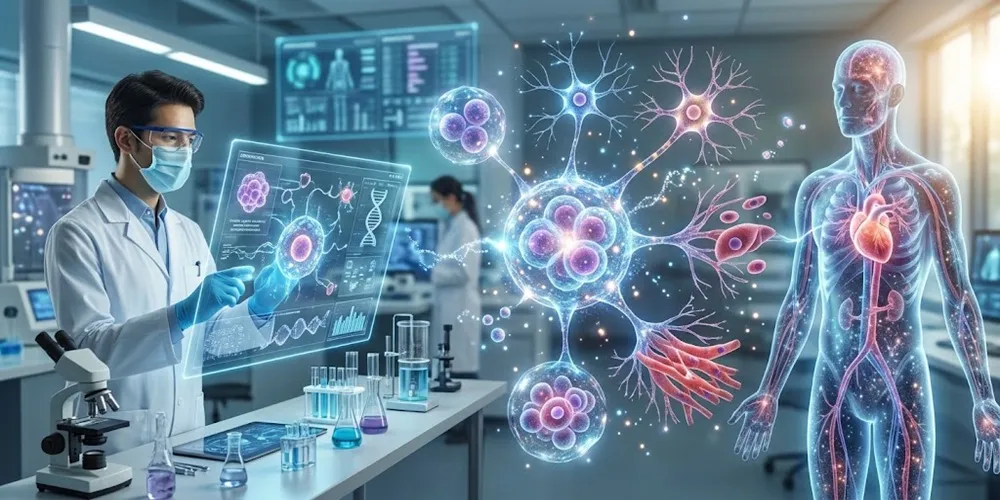
Induced pluripotent stem cells can give rise to virtually every cell type, including those found within solid organs and tissues. The regeneration potential of these cells is being studied by creating iPSC-derived organs and sheets of tissue and testing their ability to integrate with native tissue to restore function. Researchers differentiate iPSCs into organoids as well as sheets of specific tissues from ectoderm, mesoderm, and endoderm lineages; they share characteristics with native tissue and functionally integrating with mouse embryonic tissue. After transplantation, engrafted tissue repairs localized injury, ameliorating disease and restoring function in models of injury and disease confirmed by imaging, biomarker screening plus functional analysis; integration and recovery are validated.
Induced pluripotent stem cells have the potential to generate organs and tissues. To assess their capacity for iPSC tissue regeneration, an effort was previously undertaken to generate ectodermal and mesodermal germ layer-derived sheets through the directed differentiation of pluripotent stem cell applications. Biodevices containing iPSC-derived neural ectoderm have been fabricated.
What are the steps in transforming a somatic cell into a functional cell type?
The transformation of a somatic cell into an applicable cell type involves precise procedures. It begins with the isolation of somatic cells from a patient; these are then reprogrammed into induced pluripotent stem cells (iPSCs). The iPSCs are subsequently differentiated toward a specific lineage of interest, which drives their maturation into the desired cell phenotype. Before therapeutic application, their ability to perform physiological functions characteristic of the target cell is evaluated.
Finally, safety testing procedures confirm that there are no residual undifferentiated iPSCs and that no foreign vectors remain in the cell preparation. Preclinical screening will check for any mutations acquired or epigenetic abnormalities present. After transplantation in patients, recipients will be watched for any possible adverse events-teratoma formation is one example-and these same procedures would be followed for any therapeutic application of iPSCs, whether it be disease modeling or drug testing.
How do pluripotent stem cell applications propagate through medicine?
All pluripotent stem cell applications follow an identical trajectory as they move from laboratory discovery to clinical implementation. Studies documenting discovery and validation provide evidence supporting the essential physiological properties of these cells and their derivatives; such studies may even document their ability to cure disease in human patients with only limited mechanistic detail.
Early-phase clinical trials motivated by safety concerns rapidly follow, typically conducted by iPSC therapy research teams who have previously demonstrated their ability to design and execute clinical studies successfully. Patient responses are then closely monitored to determine whether translation can move to the next phase: shifting toward therapeutic design and proof-of-concept studies in larger cohorts based on substantial laboratory data.
Such studies are now just beginning to appear for patients with diseases that iPSC-derived cells might one day repair or replace in neurology, cardiology, dermatology, and orthopedics. Given both the number and diversity of research groups around the globe, rapid progress could be seen in these and related areas if this wider community of scientists and physicians share knowledge with each other across critical links on the translational spectrum.
What safeguards do physicians implement to ensure iPSC-based therapy is safe?
Safety safeguards exist at every stage of iPSC-based therapy. Investigators preclinically ensure that there are no undesired genetic changes within the cells and that they are differentiated appropriately into the required cell type. Clinical trials then observe treated patients for any unanticipated side effects.
Safety screening is initiated as soon as the iPSCs are generated. Normal gene function and expression are checked for; mutations or abnormal structural alterations or numbers could lead to tumorigenesis. The purity of differentiated cell preparations also needs to be assessed: specific markers indicate whether the cells have differentiated correctly, along with independent tests that would detect any residual undifferentiated iPSCs that still pose a risk of tumor formation. During clinical trials, patients are monitored for adverse events; if such an event happens after treatment, it will be scrutinized closely.
How is the field progressing with real patient cases?
Safety and efficacy were described in over a dozen papers. Evidence mainly supports the need for patient-specific stem cells in complex diseases. Developments with single patients have brought out the risks and challenges of applying such an adaptable technology to human health. There are reviews on this topic.
Reviews combine iPSC preclinical data, emphasize progress with real patients, and serve as introductions. Real-world efforts state iPSC reprogramming, differentiation, and implantation into and onto human sick tissue (eyes, skin, heart brain, etc.), but few receiver tissue types are reported yet. Engraftment can improve pathophysiologic signals, but full recovery is very rare. The number of transplanted patients is small; active clinical trials that might qualify them for potential enrollment are less than a dozen.
Conclusion
Induced pluripotent stem cells hold high promise in regenerative medicine; patient-specific stem cells should make tissue rejection easier and allow customized treatments. All processes described above show how iPSCs may take medicine forward, but safety should always come first. Partnership support, plus funding and scrutiny, continue to advance progress and ethics.
Late-stage grafting of human iPSC-derived grafts into non-human primate models permits now clinical application in such fields as dermal reconstruction, corneal repair, and cardiac repair. Specific therapeutic fields see fast real-world movement with maturation of the iPSC technology toward its use in clinics. Generally speaking Japan has been at the forefront by innovation under public scrutiny rapidly developed where both advances and failures are openly reported.