 English
 Français
  Deutsch
  Русский
  Italiano
  Español
  Português
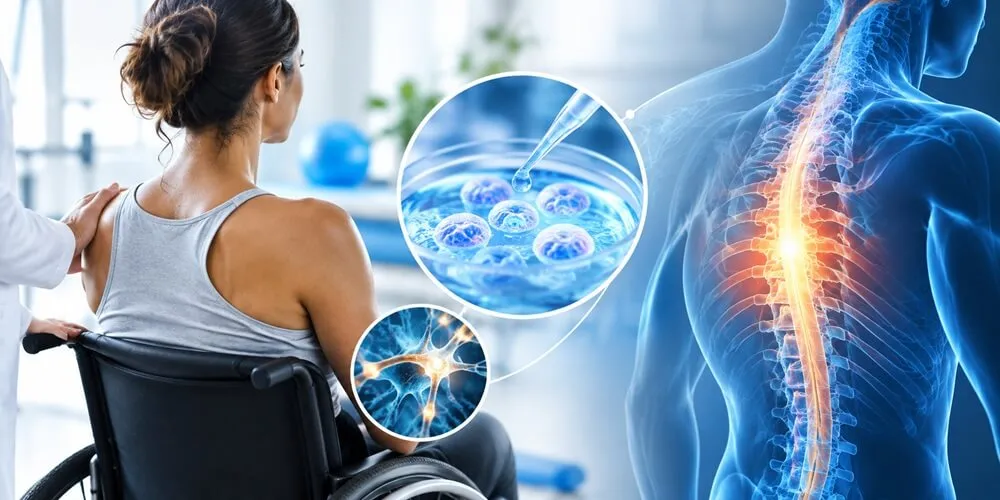
Why Is Stem Cell Therapy Being Studied for Spinal Cord Injury?
A spinal cord injury (SCI) can affect movement, sensation, breathing, bladder and bowel function, sexual function, and many other aspects of daily life. Although emergency care, spinal stabilisation, surgery, intensive rehabilitation, and assistive technologies have improved outcomes for many patients, established treatment does not yet reliably restore every damaged neural pathway.
This unmet need is one reason researchers are investigating stem cell therapy for spinal cord injury. The goal is not simply to “replace” damaged tissue. Depending on the cell type, delivery method, and timing, researchers are studying whether cell-based therapies can reduce inflammation, support surviving nerve cells, influence scar formation, encourage the growth of new connections, or replace selected neural and supporting cells.
However, the phrase spinal cord injury stem cell treatment covers many different experimental approaches. A laboratory study in an animal model is not equivalent to a human clinical trial, and an early-phase safety study is not proof that a treatment can restore function. The most accurate interpretation of current evidence is promising but cautious: cell-based therapies have shown signals of feasibility and potential benefit in early clinical research, yet larger, well-controlled studies are still needed before their effectiveness can be defined with confidence.[1] [2]
What Happens After a Spinal Cord Injury?
Understanding why treatment development is difficult helps explain both the promise and the limitations of regenerative medicine. SCI usually involves two overlapping processes. The primary injury occurs at the moment of trauma and may include compression, bruising, tearing, or disruption of neural tissue. A secondary cascade then develops over hours, days, and sometimes longer periods. This may involve inflammation, swelling, oxidative stress, loss of blood supply, cell death and the formation of a glial scar.
The final neurological outcome is influenced by the level and severity of the injury, whether it is complete or incomplete, the timing of decompression and stabilisation, complications, rehabilitation intensity and the individual’s general health. Even two people with injuries at the same spinal level can have substantially different functional profiles.
This biological complexity means that a single cell product is unlikely to work in exactly the same way for every patient. Researchers are therefore examining personalised regenerative medicine, including the type of cell, dose, route of administration, injury phase, rehabilitation programme and combination with technologies such as neuromodulation.
How Could Stem Cells Help the Injured Spinal Cord?
The proposed mechanisms depend on the cell population being studied. Some cells are investigated for their ability to support the injured environment, while others may be intended to replace or supplement specific neural or glial cells.
1. Modulating Inflammation
Mesenchymal stem or stromal cells, commonly called MSCs, may influence immune activity through paracrine signalling. In other words, their potential effects may be mediated partly by the release of bioactive molecules rather than by permanently becoming new neurons. Research has examined whether MSCs can influence macrophages, microglia and other immune pathways around the injury site.[3]
2. Supporting Surviving Neural Cells
Cell-derived growth factors and extracellular vesicles may support the survival of vulnerable neurons and oligodendrocytes. Some laboratory studies have also investigated effects on blood-vessel formation, tissue remodelling and the local environment surrounding damaged nerve fibres.
3. Replacing Selected Cell Types
Neural stem or progenitor cells, oligodendrocyte progenitor cells and other specialised populations are being studied for their potential to generate neural or supporting cells. The scientific objective is to help restore a more functional environment or rebuild components of disrupted circuits. Achieving meaningful, safe integration in a human spinal cord remains a major translational challenge.
4. Influencing Scar Tissue and Neural Connectivity
After SCI, scar formation can both protect the injured area and create barriers to axonal growth. Researchers are investigating whether cells, biomaterials, extracellular vesicles, or combination therapies can modify this environment. These approaches are still under development and should not be presented as proven spinal cord regeneration.
5. Working Together With Neurorehabilitation
Regeneration and rehabilitation are not competing concepts. If a cell-based intervention creates even a small window of improved neural plasticity or preserved function, intensive, goal-directed rehabilitation may be needed to translate that biological change into practical movement or independence. Current reviews highlight the potential importance of combining cell therapy with neurorehabilitation, imaging and other supportive technologies.[1]
Which Stem Cell Types Are Being Studied for Spinal Cord Injury?
There is no single universal “stem cell treatment” for SCI. Different cell sources have different biological characteristics, manufacturing requirements, delivery methods, safety considerations, and levels of clinical evidence.
| Cell type | Why it is being studied | Current research considerations |
|---|---|---|
| Mesenchymal stem/stromal cells (MSCs) | Immune modulation, trophic support, and potential improvement of the injury microenvironment | Among the most clinically studied cell types, but efficacy remains uncertain and protocols vary considerably |
| Neural stem/progenitor cells | Potential support or replacement of selected neural cells and neural-network components | May require specialised delivery and careful monitoring for integration and safety |
| Pluripotent stem-cell-derived neural cells | Potential to produce defined neural progenitor populations at scale | Manufacturing, differentiation, tumour risk and long-term safety require rigorous control |
| Oligodendrocyte progenitor cells | Potential support for myelination and neural signal transmission | Strong preclinical interest; human evidence remains early |
| Olfactory ensheathing cells | Studied for possible support of axonal growth and remodelling | Results have varied between studies and require careful interpretation |
| Schwann cells | Investigated for support of peripheral nerve-like repair mechanisms | Delivery, survival and integration within the central nervous system remain important questions |
| Bone-marrow-derived cell populations | May provide a combination of immunomodulatory and supportive effects | Cell composition and study protocols differ, making comparisons difficult |
A 2025 review of human clinical research described studies involving fetal neural stem/progenitor cells, pluripotent stem-cell-derived neural cells, MSCs, olfactory ensheathing cells and Schwann cells. It concluded that promising findings have been reported, particularly in some subacute SCI studies, but that no universally recognised breakthrough has yet established a standard cell therapy for spinal cord injury.[1]
What Does Human Clinical Research Show?
Early-Phase Trials Have Mainly Focused on Safety and Feasibility
Many human studies have been small, early-phase investigations. Their primary goals are often to determine whether a cell product can be manufactured consistently, delivered safely and monitored over time. These studies may also record changes in motor scores, sensation, pain, spasticity, bladder or bowel function and quality of life, but they are usually not large enough to prove efficacy.
The distinction matters. If several participants improve after treatment, the result may be encouraging, but improvement can also be influenced by spontaneous neurological recovery, rehabilitation, differences in baseline injury, measurement variability or other medical care. A controlled trial with an appropriate comparison group is more informative than an uncontrolled case series.
What Did the CELLTOP Study Report?
One frequently discussed example is the CELLTOP phase 1 study conducted by Mayo Clinic researchers. The study involved 10 participants with traumatic spinal cord injury classified as AIS grade A or B. Treatment began, on average, 11 months after injury, and participants were followed for two years. The researchers reported that the cell products were manufactured and administered to all participants, that no serious adverse effects occurred, and that seven participants improved by at least one AIS grade.[4]
These findings are important as an early safety and feasibility signal, but they should not be interpreted as proof that every patient will experience neurological recovery. The study was small and did not establish the comparative effectiveness of the intervention. The investigators themselves emphasised that not every participant would be expected to respond in the same way and that larger controlled research is needed.[4]
What Do Systematic Reviews Show?
A 2024 systematic review examined 72 studies involving 1,144 cases and 186 controls. It reported that different cell types were associated with improvements in different outcome measures, including some motor, sensory, daily living and electrophysiological outcomes. However, the diversity of cell products, protocols and outcome measures makes it difficult to translate these findings into one standard treatment recommendation.[2]
A separate 2025 review of human MSC studies summarised 26 clinical investigations and reported that MSC transplantation was feasible and considered safe across the studies reviewed. At the same time, the authors stressed that larger randomised controlled trials are needed to evaluate therapeutic efficacy more reliably.[3]
Taken together, these findings support continued research rather than a definitive clinical conclusion. Researchers are seeing signals that justify further investigation, but the field still needs stronger evidence about who benefits, which cells work best, when they should be administered, how they should be delivered, and what long-term risks may occur.
What Does Preclinical Research Show?
Preclinical research is an essential step before large-scale human trials. Animal studies allow researchers to compare cell types, doses, timing, and delivery methods under more controlled conditions. A 2025 umbrella review and meta-analysis evaluated 31 systematic reviews and meta-analyses covering 323 original studies and 11,290 rodents. It reported significant locomotion recovery across several stem cell categories in animal models, with particularly strong findings for umbilical cord-derived MSCs and oligodendrocyte progenitor cells in the analysed experiments.[5]
The same review also found that outcomes were influenced by the injury model, the interval between injury and treatment, cell dose and the use of antibiotics or immunosuppressants. This is a valuable reminder that “stem cells work” is too broad a conclusion. Results may depend heavily on the conditions under which cells are prepared and administered.
Animal findings cannot be transferred directly to humans. Rodent spinal cords, injury patterns, rehabilitation environments, and outcome measures differ from those in people. Preclinical evidence can identify promising approaches, but it does not predict with certainty whether a treatment will restore walking, hand function, sensation, or bladder control in a particular patient.
Is Stem Cell Therapy for Spinal Cord Injury FDA-Approved?
The regulatory status of a cell therapy depends on the country, product, manufacturing process, clinical indication and approval pathway. In the United States, the FDA states that stem cell products are regulated and that, generally, stem cell products require FDA approval. The FDA consumer alert also warns that many products marketed as regenerative medicine have not been shown to be safe or effective and may create significant safety risks.[6]
The 2025 review of human SCI cell therapies states that there are currently no FDA-approved stem cell-based therapies for spinal cord injury.[1] This is an important distinction for patients considering treatment abroad or through private clinics. Participation in a properly authorised clinical trial is not the same as purchasing an unproven intervention marketed with guarantees.
Patients should ask whether the proposed treatment is part of a registered clinical trial, whether the protocol has ethics approval, how the cells are manufactured, what follow-up is provided, and how adverse events are reported. Claims such as “guaranteed paralysis reversal,” “permanent spinal cord regeneration,” or “100% success” should be treated as major warning signs.
What Are the Potential Benefits Being Studied?
Researchers are not limiting their evaluation to walking ability. Depending on the injury and study design, potential outcome areas may include:
- Upper- or lower-limb motor function,
- Sensory function, including touch and pinprick,
- Trunk control and balance,
- Spasticity and neuropathic pain,
- Bladder and bowel function,
- Respiratory function,
- Activities of daily living and independence,
- Electrophysiological signals and imaging markers,
- Quality of life and participation.
A meaningful result for one person may be improved hand control, reduced pain or greater independence rather than complete neurological recovery. This is why realistic goal setting and validated functional assessments are central to responsible clinical research.
What Are the Risks and Limitations?
Cell therapy is not risk-free. The risks depend on the cell type, source, route of administration, dose, preparation process, and whether surgery or immunosuppression is required. Potential concerns may include infection, bleeding, inflammation, immune reactions, worsening pain or spasticity, abnormal tissue growth, tumour formation, clotting, or complications related to the delivery procedure.
There are also practical and scientific limitations. Studies may involve small patient groups, different injury levels, different time points, and inconsistent outcome measures. Some patients may receive intensive rehabilitation at the same time, making it difficult to determine how much improvement is attributable to the cells. Long-term follow-up is essential because some complications may not appear immediately.
The FDA has specifically warned about misleading marketing and adverse events associated with unapproved regenerative medicine products, including stem cell and exosome products.[6] A responsible provider should never discourage a patient from seeking an independent medical opinion or from reviewing the protocol and regulatory documents.
Why Timing, Injury Severity and Rehabilitation Matter
The timing of treatment may influence the biological environment of the spinal cord. Acute, subacute, and chronic injuries may have different levels of inflammation, scarring, and neural plasticity. The appropriate treatment window is still being studied and may vary by cell type and mechanism.
Injury severity also matters. An incomplete SCI may preserve some neural pathways that can be trained or strengthened through rehabilitation, while a complete injury may present a different therapeutic challenge. Level of injury, age, overall health, spasticity, pain, autonomic function, and previous operations may all affect eligibility and outcomes.
Rehabilitation remains central. Even when a patient is being evaluated for regenerative medicine, physical and occupational therapy, respiratory care, pressure-injury prevention, bladder and bowel management and psychological support remain important components of comprehensive SCI care. Stem cell therapy should not be presented as a replacement for rehabilitation.
What Should Patients Ask Before Considering a Stem Cell Programme?
A careful consultation should provide clear, specific answers rather than broad promises. Patients and families may wish to ask:
- Is this treatment part of a registered clinical trial or an approved clinical service?
- What exact cell type is being used, and where are the cells sourced from?
- Are the cells autologous or allogeneic?
- How are the cells processed, tested, stored, and released for treatment?
- What published human evidence supports this exact protocol?
- What are the inclusion and exclusion criteria?
- What are the known and possible short- and long-term risks?
- Will the treatment involve spinal surgery, lumbar puncture, or immunosuppressive medication?
- What rehabilitation programme and follow-up schedule are included?
- What happens if there is no improvement or an adverse event?
- Is an independent physician’s assessment encouraged?
- Are outcomes measured with validated neurological and functional scales?
A trustworthy programme should communicate uncertainty openly. Ethical patient counselling includes both what research suggests and what it has not yet proven.
What Does Emerging Research Show Overall?
The current evidence supports a balanced conclusion. Stem cell therapy for spinal cord injury is a scientifically active and promising field, but it is not yet a universally established cure for paralysis or a guaranteed method of spinal cord repair.
Early human studies, including MSC and neural stem/progenitor cell research, suggest that some approaches can be delivered with acceptable short-term feasibility in carefully selected patients. Reviews also report signals of neurological or functional improvement. Nevertheless, the evidence remains limited by small sample sizes, heterogeneous protocols, absence of consistent control groups and relatively limited long-term data.[1] [2] [3] [4]
The next stage of progress will depend on larger controlled trials, standardised cell manufacturing, reliable outcome measures, longer follow-up and carefully designed combinations with neurorehabilitation, neuromodulation, biomaterials or other regenerative strategies. The aim should be not only to produce encouraging headlines, but to identify reproducible, safe and clinically meaningful improvements for well-defined patient groups.
Hope Should Be Matched With Evidence
For people living with spinal cord injury, emerging research offers legitimate reasons for hope. Scientists are investigating whether carefully prepared cell therapies can support the injured spinal cord and complement rehabilitation. Several early studies have reported feasibility and possible neurological benefits, while preclinical work continues to identify promising cell types and treatment conditions.
At the same time, responsible communication is essential. Stem cell treatment for spinal cord injury remains an evolving medical field, and outcomes cannot be guaranteed. Patients should evaluate the quality of the evidence, ask detailed questions about the protocol, confirm the regulatory and ethical status of the programme, and involve qualified specialists in decision-making.
Zaren Stem Cell is committed to presenting regenerative medicine in an evidence-informed and patient-centred context. Any assessment of eligibility should be based on the individual’s injury history, neurological status, medical records, current rehabilitation needs and a careful discussion of potential benefits and risks.
Medical disclaimer: This article is for educational purposes only and is not a diagnosis, treatment recommendation or substitute for advice from a qualified physician. Stem cell-based interventions for spinal cord injury remain an evolving area of research, and eligibility, potential benefits, and risks must be assessed individually by an appropriately qualified medical team.
References
[1] Sugai K, Nakamura M, Okano H, Nagoshi N. “Stem cell therapies for spinal cord injury in humans: A review of recent clinical research.” Brain & Spine, 2025. Available at: https://pmc.ncbi.nlm.nih.gov/articles/PMC11870206/
[2] Abolghasemi R, et al. “Systematic Review of Cell Therapy Efficacy in Human Spinal Cord Injury.” Tissue Engineering and Regenerative Medicine, 2024. Available at: https://pubmed.ncbi.nlm.nih.gov/37917104/
[3] Shkap M, Namestnikova D, Cherkashova E, et al. “Clinical Insights into Mesenchymal Stem Cell Applications for Spinal Cord Injury.” International Journal of Molecular Sciences, 2025. Available at: https://pmc.ncbi.nlm.nih.gov/articles/PMC12733355/
[4] Mayo Clinic. “Study finds stem cell therapy is safe and may benefit people with spinal cord injuries.” 2024. Available at: https://www.mayoclinic.org/medical-professionals/neurology-neurosurgery/news/study-finds-stem-cell-therapy-is-safe-and-may-benefit-people-with-spinal-cord-injuries/mac-20567444
[5] Azimi A, et al. “Stem cell therapy for locomotion recovery and neuropathic pain alleviation in spinal cord injury: an umbrella review and meta-analysis.” Spinal Cord, 2025. Available at: https://www.nature.com/articles/s41393-025-01104-x
[6] U.S. Food and Drug Administration. “Consumer Alert on Regenerative Medicine Products Including Stem Cells and Exosomes.” Available at: https://www.fda.gov/vaccines-blood-biologics/consumers-biologics/consumer-alert-regenerative-medicine-products-including-stem-cells-and-exosomes
[7] ClinicalTrials.gov. “Safety Study of Human Spinal Cord-derived Neural Stem Cell Transplantation for the Treatment of Chronic SCI.” Study NCT01772810. Available at: https://clinicaltrials.gov/study/NCT01772810
Editorial note for Zaren Stem Cell: Before publication, the clinic should verify its current regulatory status, exact treatment offerings, physician credentials, patient eligibility criteria, consent documents and claims about clinical outcomes. Any statements about availability or treatment suitability should be reviewed by the responsible medical team.
Author: Zaren Stem Cell Editorial Team